AI Visibility
Will AI Find Your Business, or Will You Get Lost in the Crowd?
AI tools are changing how people search, compare, and make decisions. Learn what AI visibility means, why a website or online store can be online but still unclear to AI tools, and how to take a practical first step.
Published 2026-06-03 · Visible AI Site
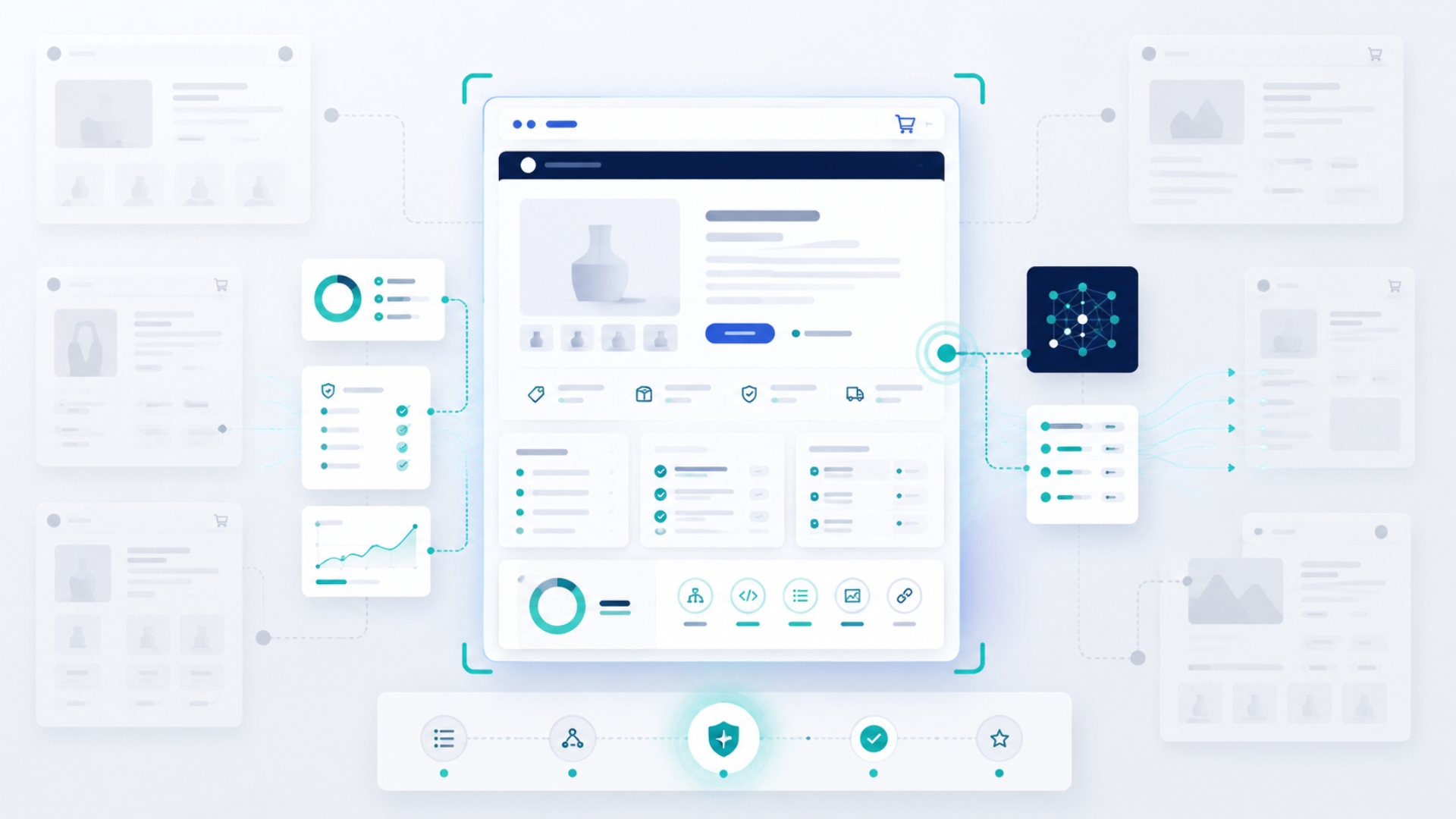
AI search is changing how people find businesses. A customer may not always open a search engine, type a few keywords, and click through ten blue links. They may ask an AI tool to compare local providers, explain a service, suggest products, summarize options, or help them decide who to contact.
That does not mean your website or online store suddenly stops mattering. It means your website has a new job.
It still needs to look clear to people. But it also needs to be clear enough for AI tools to read, understand, and explain. If your website or store is difficult for those tools to understand, your business may still exist online, but it can quickly get lost in the crowd.
This is what AI visibility is about.
It is not a magic trick. It is not a promise that ChatGPT, Gemini, Claude, Perplexity, or Google will recommend your business. It is a practical question:
Can AI tools clearly read and understand your website or online store?
If the answer is weak, the first step is not panic. The first step is to find the gaps.
What AI visibility means in plain English
AI visibility means your website or online store gives AI tools enough clear information to understand what your business does, who you serve, what you offer, and why someone might trust you.
For a service business, that may include your services, location, contact information, opening hours, team, process, pricing approach, case examples, and frequently asked questions.
For an online store, it may include product names, descriptions, prices, stock status, product variants, shipping details, return policy, product images, product categories, and store trust signals.
A simple way to think about it is this:
| Traditional website question | AI visibility question | |---|---| | Does the site look good? | Can AI tools understand what the site says? | | Can visitors find the main pages? | Can crawlers and AI tools reach the important pages? | | Are the services or products listed? | Are the services or products described clearly enough to compare? | | Is there a contact page? | Is the business identity and contact information easy to verify? | | Is the store attractive? | Are products, prices, stock, and policies clear and consistent? |
A website can pass the first column and still struggle with the second.
That is the hidden problem many small business owners do not see.
Why a website can be online but still unclear to AI tools
Most business owners judge a website by what they can see: the design, the photos, the homepage, the colors, and whether the site opens on a phone.
Those things matter. But AI tools and search systems also depend on signals that are less obvious.
They need to access your pages. They need readable text. They need clear headings. They need links that lead to important sections. They need business details that match across the site. If you sell products, they need product data that is complete and consistent.
A website can look professional and still have problems such as:
- Important pages are hard to reach.
- Service pages are too vague.
- Product descriptions are too thin.
- Page titles and descriptions are missing or duplicated.
- The website does not clearly explain who the business serves.
- Contact, privacy, terms, shipping, or return pages are missing or buried.
- Product prices, stock, or policies do not match across the page, store data, and structured data.
- Website settings or security tools accidentally block useful crawlers.
- The site relies too much on scripts or visual effects that make content harder to read.
A person may still understand the site after clicking around. But an AI tool may not have the same patience, context, or access.
That is why AI visibility is not only about publishing more content. It is about making the important information easier to find, read, and trust.
What AI tools may look for when reading a business website or store
Different AI tools work in different ways. Some may rely on search results. Some may fetch web pages when a user asks a question. Some may use structured product data, public content, or third-party sources. The details can change over time.
But from a practical website owner’s point of view, the foundation is still clear. Your website or online store should make the following information easy to understand.
1. What your business is
AI tools need to identify your business clearly.
A small business website should make it obvious what the company does, where it operates, and who it helps. This is why a clear homepage, About page, Contact page, and service pages matter.
For example, a visitor should not need to guess whether a company is a local contractor, a national consultancy, a clinic, a training center, or an ecommerce brand. AI tools should not need to guess either.
2. What you offer
Your services or products should be explained in plain language.
A service page should answer basic buyer questions: What is the service? Who is it for? What problem does it solve? What is included? What should the visitor do next?
A product page should answer similar questions: What is the product? Who is it for? What are the key details? What variants exist? Is it in stock? Can it be shipped? Can it be returned?
Thin pages make this harder. A product name and one photo may not be enough. A service list with no explanation may not be enough.
3. Whether the information is trustworthy
AI tools are more useful when they can connect a business to clear trust signals.
That can include contact information, policy pages, consistent business details, real reviews, author information, helpful FAQs, and clear support paths.
For online stores, trust also includes shipping, return, warranty, payment, and support information. If those details are missing or inconsistent, a product may be harder to recommend or explain confidently.
4. Whether the site is technically readable
This is where technical terms start to appear: crawlability, indexability, sitemap, metadata, structured data, schema, semantic HTML, and robots.txt.
Those terms can sound complicated, but the business meaning is simple.
AI tools and search systems need to be able to open your pages, follow your links, read your content, understand the page structure, and identify important facts.
Behind the scenes, that may involve:
- whether important pages are blocked;
- whether the site has a useful sitemap;
- whether pages have clear titles and headings;
- whether structured data describes the business, article, product, or offer;
- whether links and buttons are built in a way machines can understand;
- whether the site loads the important content clearly.
You do not need to become a developer to care about these things. You only need to know that they can affect whether your website is easy or difficult for AI tools to understand.
Why small businesses can quickly get lost in the crowd
Large companies often have teams working on search, content, product data, design, analytics, accessibility, and technical maintenance. Small businesses usually do not.
That creates a gap.
A small business may have paid for a website years ago and assumed the job was finished. An online store may have added hundreds of products without checking whether product titles, descriptions, variants, prices, shipping details, and policies are consistent. A service business may rely on a homepage and a contact form without building clear pages for each service.
This was already a problem in traditional search. AI-assisted discovery can make it more important.
When people ask AI tools to compare options, they often expect a direct answer. They may not visit every website manually. They may ask for a shortlist. They may ask which provider fits their situation. They may ask whether a store looks reliable. They may ask what product has a specific feature.
If your business information is unclear, incomplete, or hard to access, your business may be skipped, misunderstood, or summarized poorly.
That does not mean AI tools are “against” small businesses. It means small businesses need to make their information easier to read.
The good news is that many useful improvements are practical:
- clearer service pages;
- better product descriptions;
- visible contact and policy pages;
- clean page titles and headings;
- basic structured data;
- crawlable navigation;
- accurate product data;
- stronger internal links;
- fewer technical blocks;
- clearer trust signals.
You do not need to fix everything at once. But you do need to know where the gaps are.
AI visibility is not the same as traditional SEO
AI visibility and SEO are connected, but they are not identical.
Traditional SEO often focuses on helping pages appear in search results. It includes technical setup, content quality, links, search intent, page speed, and many other factors.
AI visibility builds on some of those foundations, but the goal is slightly different.
The question is not only “Can this page rank?”
The question is also:
- Can an AI tool understand the page clearly?
- Can it summarize the business accurately?
- Can it identify the right service or product?
- Can it compare this offer with other options?
- Can it find the policies and trust details a buyer needs?
- Can it tell whether the information is current and consistent?
For example, a product page may have a title and image, but if the variants are confusing, the stock status is unclear, and the return policy is hidden, it may be weak for AI shopping discovery.
A service page may mention “solutions” and “expertise,” but if it never explains the actual service, who it is for, or what happens next, it may be weak for AI-assisted comparison.
SEO still matters. But AI visibility asks you to go beyond keywords and think about clarity, structure, consistency, and trust.
What the AI Visibility Checker can check automatically
The AI Visibility Checker is designed to give you a practical first look at selected signals that may affect how clearly AI tools can access, read, and understand your website or online store.
The free scan may check signals such as:
- whether the URL can be accessed properly;
- whether HTTPS is available;
- whether a sitemap appears to exist;
- whether important page metadata is present;
- whether the page has a clear title and heading;
- whether structured data is detected;
- whether product schema appears on store pages where relevant;
- whether basic business or trust pages can be found;
- whether selected crawler access signals look blocked or unclear;
- whether basic page structure is readable.
These checks are useful because they reveal issues that many business owners would not notice by looking at the design alone.
For example, the scan may show that a website has a missing meta description, unclear structured data, a missing sitemap reference, or no detected product schema. Each issue gives you a starting point.
The goal is not to make the scan sound more powerful than it is. The goal is to make hidden readiness gaps visible.
What still needs manual review
An automated scan cannot fully understand your business, your competitors, your products, your customers, or your market.
Some issues need a person to review them.
For example, a scan may detect that a product page has structured data, but it may not know whether the product description is actually useful. It may detect a Contact page, but it may not know whether the contact information is convincing. It may detect headings, but it may not know whether the article answers a real customer question well.
Manual review is still important for:
- content quality;
- service clarity;
- product description quality;
- product data completeness;
- competitor comparison;
- actual AI answer testing;
- business trust signals;
- customer questions;
- policy accuracy;
- checkout and form behavior;
- deeper accessibility and usability issues.
A good scan gives you a starting point. A full audit goes deeper.
That distinction matters. Visible AI Site should help you understand the first layer without pretending that one automated check can prove everything.
How to start improving AI visibility
Start with the basics.
You do not need to chase every new AI term. You do not need to install every plugin. You do not need to rewrite your whole website before you understand the problem.
A practical first step is to ask:
- Can AI tools and search systems access my important pages?
- Can they understand what my business offers?
- Are my services or products explained clearly?
- Are my business details and policies easy to find?
- Is my website or store data consistent?
- Are there technical gaps that make the site harder to read?
For a normal business website, begin with your homepage, About page, Contact page, main service pages, and top blog articles.
For an online store, begin with your homepage, main collections or categories, top products, shipping policy, return policy, and checkout path.
Then use the scan result to decide what deserves attention first.
Some fixes may be simple. Others may need help from a developer, SEO specialist, ecommerce manager, or content writer. The important thing is to stop guessing.
Run a practical first check
AI visibility is not about fear. It is about clarity.
Your website or online store may already have many good signals in place. It may also have hidden gaps that make it harder for AI tools to read, compare, or explain what you offer.
The first step is simple.
Run the AI Visibility Checker to see whether your website or online store has the basic signals AI tools need.
The scan gives you a practical first look. Some issues can be checked automatically, while others need a manual review of your content, products, competitors, and business trust signals.
If the scan finds issues you do not want to handle yourself, you can request help understanding what matters, what can wait, and what should be fixed first.
Conclusion
AI tools are becoming part of how people search, compare, and make decisions. That makes your website or online store more important, not less important.
But the role of the website is changing. It must be more than attractive. It must be clear, readable, structured, and trustworthy.
A small business can still compete in this shift, but not by hiding important information, using vague content, or assuming that a good-looking homepage is enough.
If AI tools cannot read your site clearly, your business can quickly get lost in the crowd.
The practical response is to check your foundation, fix the gaps that matter, and make your website or online store easier to understand.
Run a practical first check
Use the AI Visibility Checker to see whether your website or online store has selected public signals in place.
Run the AI Visibility Checker